
 Donald Henry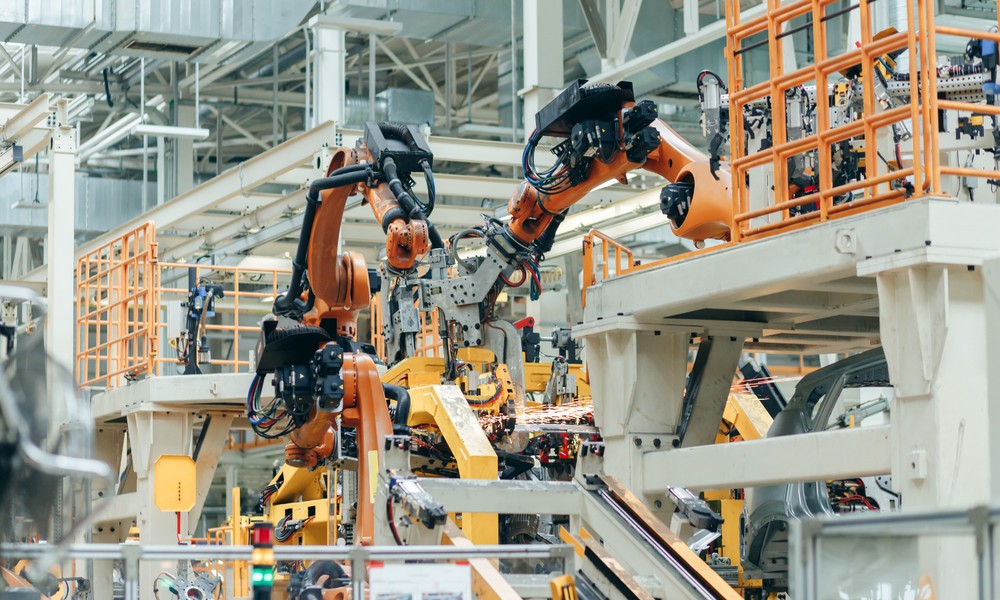
Deploying automation is no longer a question of technological feasibility; it is a question of capital allocation. For decades, the financial blueprint for industrial automation was rigid. Achieving a viable return on investment required multi-year production runs of a single product variant to amortize the massive upfront expenditures of custom-engineered, fixed machinery.
Today, shifting market dynamics have made long-term demand unpredictable. Shorter product lifecycles and high-mix manufacturing profiles mean that fixed automation infrastructure introduces substantial financial risk. If a production line requires a total tear-down and rebuild to accommodate a new product design, the true cost of that asset includes not just the hardware, but the accompanying operational downtime and lost market opportunity.
To maintain capital efficiency, modern operations must decouple production capacity from structural layout. The path forward lies in scalable, modular automation framework setups that adapt to shifting production demands without draining capital reserves.
Analyzing the Total Cost of Ownership
Evaluating an automation investment requires looking beyond the initial purchase price of the machinery. True financial clarity comes from examining the Total Cost of Ownership (TCO), which balances capital expenditure (CapEx) against ongoing operational expenditure (OpEx).
Total Cost of Ownership (TCO)
├── Capital Expenditure (CapEx)
│ ├── Base Hardware Architecture
│ └── System Integration & Engineering
└── Operational Expenditure (OpEx)
├── Deployment Downtime Costs
├── Floor Space Allocation
└── Post-Installation Reconfiguration
Traditional industrial automation carries a heavily front-loaded TCO structure. Software programming, bespoke safety fencing, and complex mechanical integration often cost double or triple the price of the base robot arm. Furthermore, these expenses repeat themselves whenever the line needs to be modified for a product changeover.
Scalable automation architecture flips this financial model. By choosing adaptable components that integrate seamlessly via standardized software and mechanical interfaces, factories drastically lower the initial integration cost. More importantly, they protect future cash flows by reducing the cost of subsequent line alterations to a fraction of traditional setups.
The Return on Investment of Collaborative Applications
The emergence of the collaborative robot has fundamentally changed the payback period calculation for factory floors. By operating safely alongside human workers without the need for extensive, permanent physical barriers, these systems minimize the spatial footprint required for deployment.
| Investment Factor | Traditional Industrial Robots | Scalable Collaborative Systems |
|---|---|---|
| Floor Space Allocation | High (Requires dedicated safety zones) | Minimal (Integrates into existing stations) |
| Integration Complexity | Custom PLC coding and specialized engineering | Plug-and-produce software frameworks |
| Reconfiguration Expense | Prohibitive (Requires physical reconstruction) | Low (Software-driven adaptation) |
From a financial perspective, a flexible automation asset functions as a reusable utility rather than a sunk cost. If a specific product line sees a drop in market demand, a lightweight collaborative system can be relocated to a completely different area of the facility-such as shifting from machine tending to end-of-line palletizing-within a single shift. This liquidity of physical assets drastically reduces the risk of stranded capital on the factory floor.
Calculating Your Automation Payback Period
To understand how individual operational variables affect your financial outcomes, use the interactive calculator below to evaluate your potential payback timeline and net savings.
Mitigating Reconfiguration Downtime Risks
The most hidden, destructive cost in manufacturing is planned downtime. When an assembly line stops for physical modifications, the business continues to incur overhead costs while generating zero revenue from that line.
Smart automation components mitigate this risk through software-defined changeovers. Modern tooling and robotic peripherals utilize unified programming ecosystems that allow operators to save specific task profiles as digital recipes.
When a product variation changes, the operator loads the corresponding digital profile from a touchscreen terminal. The system automatically updates parameters such as gripping force, stroke acceleration, and trajectory paths. By eliminating the need for manual tool calibration and custom PLC rewriting, changeover times drop from hours to minutes. This operational speed ensures that production schedules remain fluid and responsive to unpredictable supply chain fluctuations.
Strategic Capital Allocation for Long-Term Agility
Sustained industrial growth requires balancing production output with financial flexibility. Investing heavily in dedicated, single-purpose infrastructure leaves a business vulnerable to sudden market shifts and changing consumer preferences.
By shifting toward modular, scalable automation solutions, decision-makers protect their profit margins from unnecessary capital depreciation. The ability to update, move, and repurpose automation assets ensures that the factory floor remains highly efficient, adaptable, and financially resilient for years to come.