

Business Analytics in the Age of AI: Turning Automation into Advantage
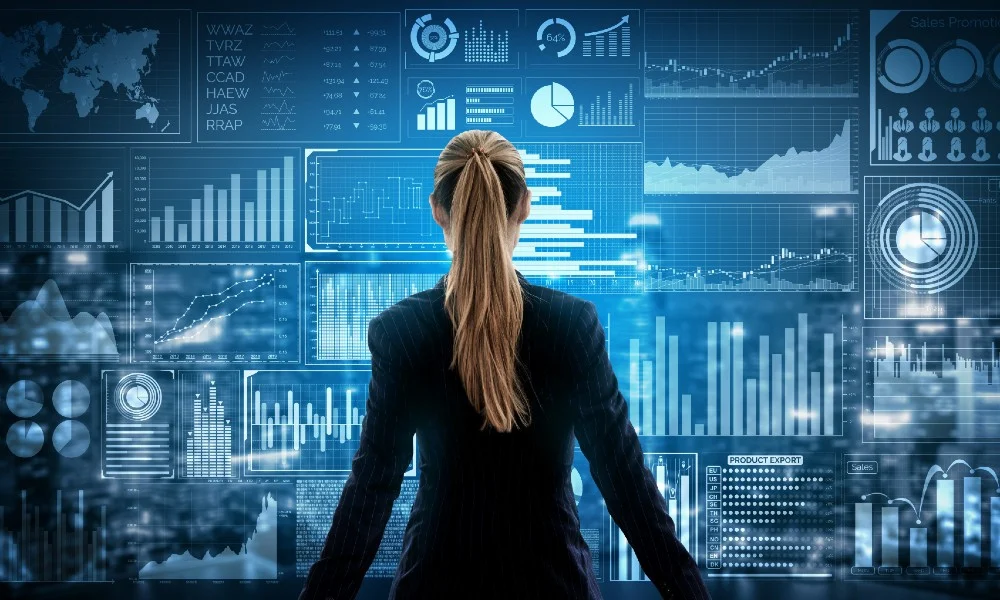
Imagine a skilled sailor navigating an ocean full of unpredictable currents. In the past, navigation depended solely on instinct and experience. Today, the sailor has access to satellite data, AI-driven forecasts, and digital maps—tools that turn uncertainty into opportunity. Similarly, in the business world, analytics powered by artificial intelligence (AI) has transformed how organisations understand markets, customers, and operations.
Business analytics is no longer just about analysing data; it’s about collaborating with intelligent systems that learn, predict, and adapt. The challenge lies in how humans can turn automation into an advantage—using AI not as a replacement, but as a partner in strategic thinking.
From Descriptive to Predictive: The New Face of Business Analytics
Traditionally, business analytics was like a historian—recording what happened and explaining why. In the age of AI, it has evolved into a visionary, capable of forecasting what will happen next. Predictive analytics uses algorithms and machine learning to identify trends, assess risks, and forecast outcomes with remarkable accuracy.
For instance, retail businesses use AI models to anticipate consumer demand and adjust inventory before shortages occur. Financial institutions leverage AI-driven analytics to detect fraud before it strikes. The ability to predict and act in real time defines modern business agility.
Learners exploring tools that support such predictive capabilities often start with a business analysis course in Bangalore, which bridges foundational analytical thinking with AI-powered techniques shaping the industry today.
Integrating Human Intelligence with Machine Precision
One of the most misunderstood ideas about AI is that it seeks to replace humans. In reality, the most successful organisations blend human insight with machine precision. AI can process vast datasets faster than any analyst, but it lacks the intuition to understand context or emotion—qualities that business analysts bring to the table.
For example, AI might identify a pattern suggesting declining sales in a particular region, but a human analyst can interpret the “why”—perhaps due to cultural shifts or local events. This collaboration creates a powerful loop of continuous learning, where machines provide clarity, and humans add meaning.
Businesses that master this symbiotic relationship move from automation to augmentation—using AI to amplify human expertise rather than diminish it.
Real-Time Decision-Making: From Reactive to Proactive
Before AI, decision-making often lagged behind real-world events. Reports were generated weekly or monthly, leading to reactive responses. Today, real-time data streams enable businesses to make proactive decisions. AI systems can monitor social sentiment, supply chain health, and financial transactions continuously, sending alerts before small issues snowball into crises.
For instance, in logistics, predictive maintenance systems use sensor data to identify equipment that may fail soon. This allows companies to fix issues before downtime occurs—saving both time and money.
Courses such as a business analysis course in Bangalore equip professionals to design and interpret these systems, helping them stay ahead in fast-paced industries where timing is everything.
Ethical Analytics: Responsibility in the Age of Algorithms
As automation becomes more influential, the ethical responsibilities of analysts expand. Data-driven decisions can have far-reaching consequences—from influencing consumer behaviour to shaping public policy. Biases hidden in algorithms can lead to unfair outcomes, and analysts must ensure transparency, accountability, and fairness in every model they design.
Ethical analytics is about understanding not only what data says but also what it means for people. Ensuring privacy, maintaining consent, and explaining AI decisions are now part of the analyst’s daily work. Businesses that prioritise ethical data practices earn long-term trust from consumers and regulators alike.
The Future: Human Insight, Machine Empowerment
The next generation of business analytics professionals will work in environments where human creativity and AI intelligence blend seamlessly. The key is adaptability—being able to learn, unlearn, and relearn as tools evolve.
AI will continue to automate repetitive tasks, but human analysts will remain at the helm, steering strategy, ethics, and innovation. Understanding both the technical and the human aspects of analytics will become essential for leadership roles in data-driven organisations.
Conclusion
The age of AI has redefined the landscape of business analytics—from descriptive reports to intelligent, predictive systems that act before problems arise. The future belongs to those who can balance automation with analytical empathy, blending the logic of algorithms with the intuition of human judgment.
As the distinction between technology and strategy blurs, professionals who possess a thorough understanding of AI-driven analytics will spearhead the transformation. By investing in effective learning pathways, such as mastering relevant tools and frameworks, analysts can evolve into strategic partners. They will be equipped to leverage automation as a sustainable competitive advantage rather than viewing it as a threat.